About Aerospace Engineering
Aerospace Engineering is the branch of engineering dedicated to the design, development, testing, and production of aircraft, spacecraft, and related systems. It encompasses both aeronautical engineering, which focuses on flight within Earth’s atmosphere, and astronautical engineering, which focuses on vehicles and systems for space exploration. Aerospace engineers apply principles of mechanical, electrical, and materials engineering, along with advanced mathematics and computer simulations, to create safe, efficient, and innovative solutions for air and space travel. The field is highly interdisciplinary, involving aerodynamics, propulsion systems, avionics, materials science, and systems integration, making it central to advancements in aviation, defense, and space technology.
Why Study Aerospace Engineering
Studying Aerospace Engineering equips students with a unique combination of technical knowledge, problem-solving skills, and innovation-driven thinking. Graduates gain expertise in areas such as aircraft and spacecraft design, propulsion, flight control systems, and advanced materials, preparing them for careers in top aerospace companies, research institutions, and space agencies. Beyond technical skills, the field develops critical thinking, teamwork, and project management abilities, which are valuable across engineering and technology sectors. Moreover, with emerging opportunities in urban air mobility, space exploration, AI-driven flight systems, and sustainable aviation, a degree in aerospace engineering positions students at the forefront of technologies that are shaping the future of transportation, defense, and humanity’s reach into space.
Research & Innovation
Aerospace Engineering is at the forefront of technological research, pushing the boundaries of what’s possible in flight and space exploration. Engineers and scientists focus on areas such as hypersonic flight, which enables aircraft to travel faster than five times the speed of sound, and lightweight composite materials that make planes and spacecraft more fuel-efficient. Artificial intelligence and automation are being integrated into flight systems to improve navigation, safety, and autonomous control. Universities, government agencies, and private companies collaborate on experimental projects like next-generation drones, Mars rovers, and reusable rockets, which are shaping the future of aerospace technology. Research in this field not only advances engineering but also has applications in defense, communications, and space exploration.
Professional Organizations & Networking
Professional organizations play a key role in the aerospace field, offering resources, networking, and career development opportunities. The American Institute of Aeronautics and Astronautics (AIAA) provides conferences, journals, and scholarships for students and professionals. In the UK, the Royal Aeronautical Society (RAeS) promotes aerospace research and organizes events connecting engineers worldwide. Joining these organizations helps students and early-career engineers access internships, mentorships, and research collaborations. They also provide platforms to stay updated on regulations, innovations, and international aerospace projects, which is crucial for career growth in a highly competitive global industry.
Emerging Fields in Aerospace
Aerospace Engineering is evolving rapidly with several emerging fields:
- Urban Air Mobility (UAM): Development of flying taxis and delivery drones to revolutionize urban transportation.
- Space Mining & Interplanetary Exploration: Engineers are designing spacecraft and robotic systems for mining asteroids and exploring planets.
- Advanced Propulsion Systems: Innovations like ion drives and nuclear thermal rockets are being researched for longer, faster space missions.
- AI-Driven Flight Systems: Autonomous aircraft, predictive maintenance, and intelligent navigation systems are transforming aviation efficiency and safety.
These emerging areas highlight how aerospace engineering is no longer limited to traditional airplanes and rockets—it’s becoming central to future transportation, space colonization, and high-tech defense systems.
Job Opportunities in Aerospace Engineering
A degree in Aerospace Engineering opens the door to a wide range of highly specialized and rewarding careers. Graduates can work as aerospace engineers, designing and testing aircraft, rockets, satellites, and drones, or as flight test engineers, ensuring prototypes meet safety and performance standards. Avionics engineers develop advanced navigation, communication, and control systems, while structural analysts focus on the strength and durability of aerospace materials. There are also opportunities in research and development, contributing to innovations in propulsion systems, aerodynamics, or space exploration technologies. Professionals can find positions in leading aerospace companies such as Boeing, Airbus, SpaceX, and Lockheed Martin, government agencies like NASA or ESA, defense contractors, and startups in urban air mobility and satellite technology. Additionally, skills gained in aerospace engineering—problem-solving, systems design, and advanced simulations—are highly transferable to other industries, including automotive, robotics, and renewable energy.
Recommendations University
For students aspiring to enter this exciting field, several universities are highly recommended for their strong aerospace programs, research opportunities, and industry connections.
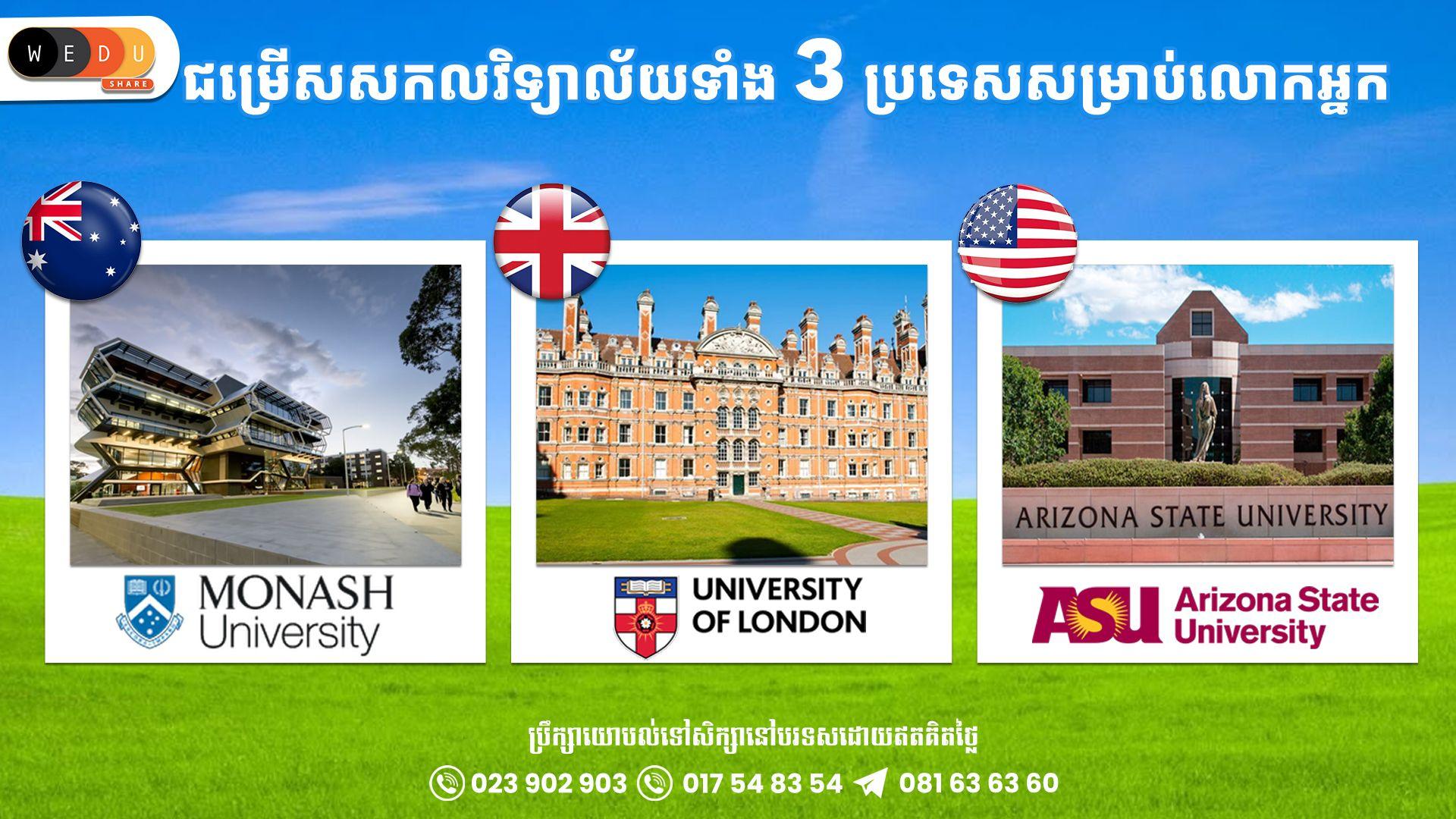
- Monash University
- Oregon States University
- University of Arizona
- RMIT University
- University of London
- University of Sheffield
- Queen Mary University of London
- University of Birmingham
Eligibility Criteria
- Strong academic record
- English proficiency (IELTS/TOEFL/Duolingo)
- Relevant subject background (math, physics, sciences)
- Supporting documents (transcripts, passport, statement of purpose, CV, recommendations)
- Financial proof for visa and tuition
Fees
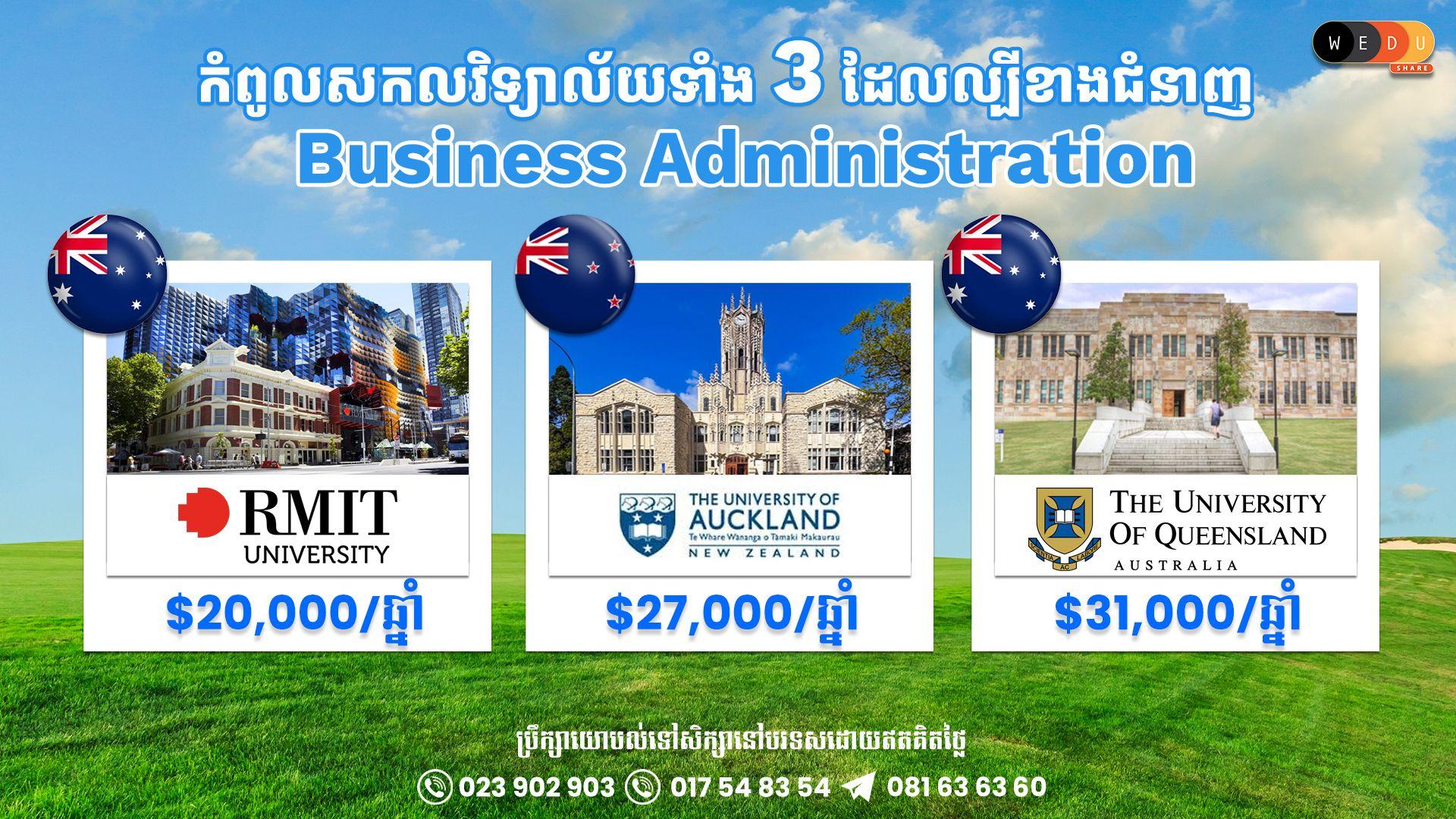
Australia: Monash University, RMIT University: $19,000-$27,000
United States: (Oregon State University, University of Oklahoma, University of Arizona): $30,000-$35,000
United Kingdom: (University of London, University of Sheffield, Queen Mary University of London, University of Birmingham): $20,000-$34000
Further Assistance
មកណាត់ជួបជាមួយអ្នកប្រឹក្សារបស់ WEduAbroad ឥឡូវនេះដើម្បីស្វែងយល់បន្ថែម តាមរយ:តំណភ្ជាប់: https://forms.office.com/r/jMiXnNavhc
You can contact to WEduAbroad Team for further support and assistance at +855 23 902 903 |+855 17 54 83 54 | +855 81 63 63 60